Controle do Percevejo-da-planta-ocidental
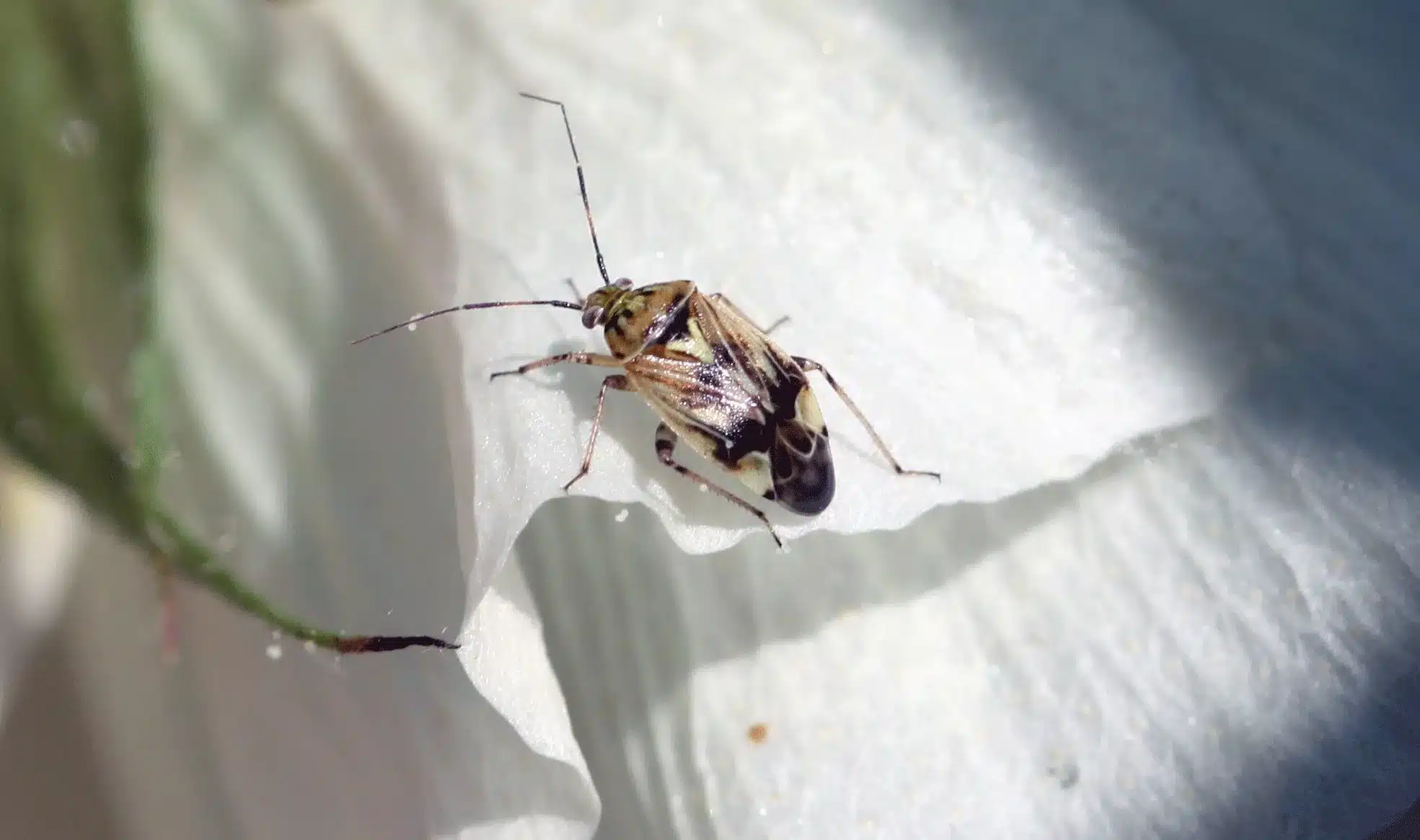
What Is the Western Tarnished Plant Bug?
The Western Tarnished Plant Bug (Lygus hesperus) is a highly mobile, piercing-sucking insect that poses significant threats to high-value crops across the western regions of North America. Characterized by its variable color—ranging from yellow-green to bronze—and a distinct triangular mark on its back, this pest affects a broad range of host crops, including lettuce, celery, strawberries, and cotton.
Both adults and nymphs feed by puncturing plant tissues, causing internal cellular damage. These injuries develop into necrotic lesions, leaf deformations, and marketability loss in leafy vegetables. In sensitive crops, even low population thresholds can result in serious economic losses.
Recognizing Crop Damage from Lygus Feeding
Early signs of infestation often go unnoticed until symptoms become irreversible. Feeding activity by nymphs and adults disrupts cell division, resulting in:
Sunken lesions and calluses on leaf surfaces
Midrib deformation or pits from egg-laying
Stunted growth and chlorosis in leafy crops
Degraded visual quality in harvested produce
Because Lygus bugs are cryptic and their activity fluctuates with temperature and wind conditions, field scouting remains essential, especially during dry-down periods when they migrate from weeds into cultivated fields.
IPM-Based Management: Combining Cultural, Biological, and Chemical Tools
1. Cultural Controls
Manejo de Ervas Daninhas: Eliminate surrounding vegetation to reduce early-season infestations.
Perturbação do habitat: Time cultivation practices to limit egg-laying opportunities in midribs.
2. Biological Control Options
Inimigos naturais:
Anaphes iole (egg parasitoid)
Peristenus relictus (nymphal parasitoid)
Generalist predators: big-eyed bugs (Geocoris spp.), pirate bugs (Orius spp.), and spiders
Fungos Entomopatogênicos:
Beauveria bassiana e Isaria fumosorosea are effective against nymphs and adults, and compatible with organic farming systems.
Recommended Active Ingredients for Effective Chemical Control
Chemical control remains critical during peak infestation periods, particularly for export-grade crops. When selecting active ingredients, it is essential to consider efficacy, pest resistance, environmental impact, and compatibility with beneficial organisms.
Piretróides
Lambda-cialotrina e permetrina
Provide fast knockdown and residual control. Suitable for emergency use where rapid reduction of adult populations is required. Best applied in early morning or late evening to minimize harm to pollinators.
Carbamatos
Metomil
Offers broad-spectrum control including caterpillars, but is highly disruptive to natural enemies. Should only be used when dual-target control is necessary.
Organofosforados
Malatião
Moderate residual activity. Effective in warm, calm conditions. Must be rotated with other modes of action to prevent resistance buildup.
Extratos botânicos
Azadirachtin (Neem-based)
Ideal for nymph management. Offers ovicidal and anti-feedant properties. Suitable for organic and IPM systems.
Agentes Biológicos
Beauveria bassiana e Isaria fumosorosea
Provide slower, residual suppression but are valuable in IPM systems where chemical rotation and natural enemy conservation are critical.
Application Timing and Monitoring Recommendations
Conduzir sweep net scouting during calm, moderate weather to detect adult activity.
Avoid applying insecticides during mid-day heat or wind to reduce drift and improve uptake.
Rodar modos de ação per IRAC guidelines to delay resistance development. Limit the use of Group 1 and Group 3A products to no more than twice per season.
Conclusion: An Integrated Strategy for Sustainable Control
Gerenciando Lygus hesperus in commercial crop systems requires a multifaceted strategy. Cultural exclusion, enhanced biological control, and the precise application of compatible active ingredients can together suppress populations while preserving yield quality and environmental health.
For B2B clients seeking professional support, we offer a portfolio of formulated insecticides baseado em:
Lambda-cialotrina
azadiractina
Beauveria bassiana
Isaria fumosorosea
These actives are available in various formulations suited for leafy vegetables, seed crops, and horticultural settings. Contact us for label guidance, compatibility checks, and application support tailored to your regional requirements.