How to Compare Beauveria and Metarhizium Biopesticides Before Bulk Purchase
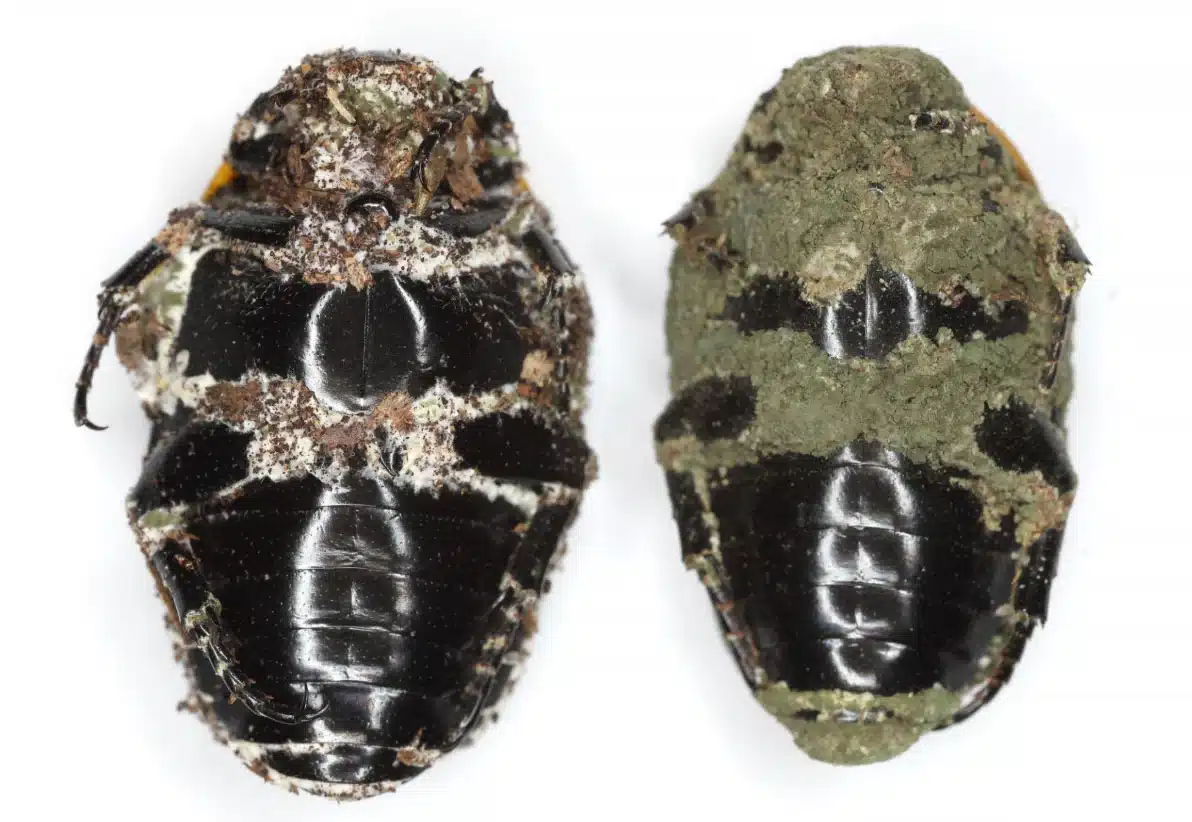
If you are purchasing Beauveria bassiana (white mold) or Metarhizium anisopliae (green mold) biological insecticides, there is one issue worth carefully considering before placing an order: The fungal species and spore content listed on the product label do not fully reflect its actual pest control efficacy.
Both of these entomopathogenic fungi have significant agricultural applications, but there may be notable differences in quality among different products. Even when using the same fungal species, differences in strain, spore viability, germination rate, and formulation can affect the final biological control performance.
Pesticide importers, distributors, and private label brands should not base their purchasing decisions solely on price and “billion spores per gram”; they must also verify the following key indicators:
- هوية السلالة: Verify the fungal strain and its origin.
- Viable Spore Count: Confirm the actual number of viable spores.
- معدل الإنبات: Check the spores’ ability to germinate.
- جودة الصياغة: Evaluate the quality of different formulations, such as WP, SC, and OD.
- استقرار التخزين: Verifies the product’s stability under specified storage conditions.
- اتساق الدفعة: Verifies quality consistency across different production batches.
These factors directly impact product quality control, shelf life, field performance, and market competitiveness.
What Are Beauveria bassiana and Metarhizium anisopliae Biopesticides?
Beauveria bassiana and Metarhizium anisopliae are both entomopathogenic fungi that exert biological control by infecting insects.
Unlike traditional chemical insecticides, which primarily act on specific neurological or physiological targets, these two fungi primarily attach to insects via their spores, which then germinate and penetrate the insect’s cuticle, ultimately reproducing inside the insect and causing its death.
بيفريا باسيانا
Beauveria bassiana is a widely used entomopathogenic fungus, commonly known as white mold.
When its conidia come into contact with the insect’s body surface, they germinate under suitable conditions and form germ tubes. Subsequently, the fungus penetrates the insect’s cuticle through mechanical action and the involvement of relevant enzymes, gradually multiplying inside the insect.
Infected insects may gradually lose their ability to move and eventually die. Under suitable conditions, white mycelium and new spores may also form on the surface of dead insects.
Research and commercial applications of Beauveria bassiana involve a variety of pests, such as:
- الذباب الأبيض
- المن
- تريبس
- Certain Caterpillars
- الخنافس
- Some Soil-Associated Insects
However, it is important to note that the host range and control efficacy vary among different strains. It cannot be assumed that all Beauveria bassiana products are effective against all of the pests listed above.
ميتارهيزيوم أنيسوبلياي
Metarhizium anisopliae, commonly known as green mold, is also an entomopathogenic fungus.
Its infection process is similar to that of Beauveria bassiana: spores come into contact with the insect’s body surface, germinate, penetrate the cuticle, and subsequently multiply inside the insect.
After infection, the insect’s carcass may become covered with a layer of green spores under suitable conditions, which is why it is also known as “Green Muscardine Fungus.”
Metarhizium anisopliae has a wide range of research and application areas in agricultural and public health pest management, such as:
- الخنافس
- سوسة الجذور
- النمل الأبيض
- القراد
- الجنادب
- Certain Soil-Associated Pests
Among these, some strains exhibit good adaptability to soil environments and are therefore of particular interest in the management of subterranean and soil-dwelling pests.
However, Metarhizium anisopliae is not limited to soil pests. Some strains can also be used for pest management in other environments, depending on strain characteristics, formulation design, and product registration.
What Are the Main Differences Between Beauveria and Metarhizium?
The basic infection mechanisms of these two fungi are similar, but differences may exist in strain characteristics, host adaptability, environmental tolerance, and commercial applications.
| عامل المقارنة | بيفريا باسيانا | ميتارهيزيوم أنيسوبلياي |
|---|---|---|
| التصنيف البيولوجي | Entomopathogenic Fungus | Entomopathogenic Fungus |
| اسم شائع | White Muscardine Fungus | Green Muscardine Fungus |
| طريقة العدوى | Contact Infection | Contact Infection |
| نوع الجراثيم | كونيديا | كونيديا |
| Typical Research Applications | Whiteflies, Aphids, Thrips, Beetles, etc. | Beetles, Termites, Ticks, Grasshoppers, etc. |
| تطبيق البيئة | Foliar and Soil Applications | Foliar and Soil Applications |
| الحساسية البيئية | Temperature, Humidity, UV | Temperature, Humidity, UV |
| عوامل الأداء الرئيسية | Strain, Spore Viability, Formulation | Strain, Spore Viability, Formulation |
Here is a key point that buyers need to understand: The application ranges of these two fungi overlap, so one cannot determine which is more suitable for a particular pest based solely on the fungus’s name.
Target Pest and Host Range
Different strains may exhibit different host ranges.
For example, certain Beauveria bassiana strains have shown application potential in biological control studies of whiteflies and thrips, while certain Metarhizium strains have received more attention in the management of beetles, termites, and some soil pests.
However, this does not mean that Beauveria is suitable only for foliar pests, or that Metarhizium is suitable only for soil-dwelling pests.
What truly determines whether a product will be effective is:
- Specific Fungal Strain.
- Target Pest Species.
- Insect Development Stage.
- Spore Viability.
- Application Environment.
- Formulation Performance.
If an importer is developing a market for a specific pest, they should prioritize requesting Biological Efficacy Data from suppliers for the target pest, rather than selecting products based solely on their names.
التكيف البيئي
Environmental conditions have a direct impact on the performance of entomopathogenic fungi.
Unlike some chemical insecticides, fungal formulations require processes such as spore attachment, germination, and infection. Therefore, environmental conditions can influence the entire infection process.
| العامل البيئي | التأثير المحتمل |
|---|---|
| درجة الحرارة | Affects spore germination, hyphal growth, and infection rate |
| الرطوبة النسبية | Affects spore germination and the establishment of infection |
| الأشعة فوق البنفسجية | May reduce the activity of spores exposed to sunlight |
| هطول الأمطار | May affect pesticide deposition on leaves and spore retention |
| رطوبة التربة | Affects the survival and activity of fungi in the soil environment |
| Host Availability | Determines the likelihood of contact between the fungus and the target insect |
It is important to note that neither fungus maintains the same level of activity under all environmental conditions.
Some strains may exhibit better tolerance to high temperatures or UV radiation, but these characteristics must be verified through strain-specific testing; it cannot be simply concluded that a particular fungus is inherently more tolerant to high temperatures or UV radiation.
Strain-Specific Performance
This is one of the quality factors most easily overlooked by buyers.
Both Beauveria bassiana and Metarhizium anisopliae comprise different strains.
Even if two products share the same species name, they may exhibit differences due to strain variations in:
- خبث
- مجموعة المضيف
- معدل الإنبات
- تحمل درجة الحرارة
- تحمل الأشعة فوق البنفسجية
- Spore Production Capacity
- استقرار التخزين
For example, within the same species of Beauveria bassiana, a strain that is highly effective against whiteflies may not be equally suitable for beetle control.
Therefore, during the procurement process, suppliers should be required to provide clear strain identification and confirm that it aligns with the product registration data, technical documentation, and production quality standards.
How to Evaluate Viable Spore Count and Germination Rate?
If you can only select a few key quality indicators for procurement review, I recommend prioritizing the viable spore count and germination rate.
This is because these two indicators help buyers understand the product’s actual biological activity more effectively than simply examining the total spore count.
Total Spore Count vs. Viable Spore Count
First, it is necessary to distinguish between two concepts:
إجمالي عدد الأبواغ refers to the total number of spores detected in a sample; this does not necessarily mean that all spores are viable.
عدد الأبواغ القابلة للحياة, on the other hand, refers to the number of spores that are viable and capable of germinating or forming colonies under specified testing conditions.
For example, two products may both be labeled as:
15 Billion Spores/g
However, one may have a higher proportion of viable spores, while the other may contain a larger number of inactivated spores.
Therefore, although the two products have the same nominal spore content, their actual biological activity may differ.
Purchasers should not judge product quality based solely on the Total Spore Count.
What Is Germination Rate?
Germination Rate refers to the proportion of spores that can germinate out of the total number of spores tested under specified testing conditions and within a specified time period.
فمثلا:
| معلمة الجودة | المنتج أ | المنتج ب |
|---|---|---|
| إجمالي عدد الأبواغ | 15 Billion/g | 15 Billion/g |
| معدل الإنبات | 95% | 75% |
| Theoretical Germinated Spore Count | 14.25 Billion/g | 11.25 Billion/g |
The data above is hypothetical and is provided to illustrate the testing logic; it does not represent actual test results for commercial products.
When testing conditions, sampling methods, and counting methods are consistent, the germination rate can help buyers assess spore viability.
However, it is important to note that the spore germination rate in a laboratory does not equate to the control rate in the field. The final biological efficacy is also influenced by the strain, pest species, environmental conditions, and application method.
What Is the Difference Between Spores/g and CFU/g?
This is a very important issue in the procurement of biological pesticides.
Spores/g and CFU/g cannot be directly considered equivalent testing metrics.
| معامل | معنى | ما يقيسه |
|---|---|---|
| Total Spores/g | Total number of spores per gram of product | Number of spores |
| Viable Spores/g | Number of viable spores per gram of product | قابلية الجراثيم للبقاء |
| معدل الإنبات | Spore Germination Rate | Germination Capacity |
| CFU / g | Number of colonies formed per gram of sample | Ability to form colonies under specified culture conditions |
CFU/g is typically determined using a culture counting method.
Since spores may aggregate, a single colony does not necessarily correspond to a single spore. Therefore, there is not necessarily a simple one-to-one relationship between CFU/g and Total Spores/g.
For importers, the most important consideration is not to require all suppliers to use the same metric, but to verify that the testing methods, product quality standards, and label claims are consistent.
When purchasing, request the following from suppliers:
- Spore Count Test Report
- Germination Rate Test Report
- Viability Test Method
- CFU Test Report (if applicable)
- دفعة COA
Only then can meaningful quality comparisons be made between products from different suppliers.
How Does Formulation Affect Fungal Biopesticide Performance?
Even when using the same fungal strain, different formulations may affect the product’s storage, dilution, dispersion, and application performance.
Currently, entomopathogenic fungi can be developed into a variety of formulations, but not every fungus or strain is suitable for all formulations.
مسحوق قابل للبلل (WP)
WP is one of the most common commercial formulations for entomopathogenic fungi.
The product typically comes in the form of a dry powder and is dispersed in water before use.
Key factors to check during procurement:
- عدد الأبواغ القابلة للحياة
- محتوى الرطوبة
- بلل
- تعليق
- تشتت
- حجم الجسيمات
- استقرار التخزين
Moisture control is particularly important for Beauveria bassiana and Metarhizium anisopliae WP products.
If the product absorbs excessive moisture during production or storage, it may affect spore viability and shelf life.
مركز التعليق (SC)
SC is a suspension formulation that exists in liquid form.
Its primary quality control parameters include:
- استقرار التعليق
- توزيع حجم الجسيمات
- قابلية إعادة التشتت
- الاستقرار المادي
- Viable Spore Retention
Compared to WP, quality control for SC requires greater attention to spore distribution, sedimentation, and long-term storage stability within the liquid system.
If significant sedimentation occurs after storage, further testing should be conducted to determine whether the product can be redispersed and whether spore viability remains within specified limits.
تشتت الزيت (OD)
OD is a formulation type that uses an oil phase as the primary dispersing medium.
For certain fungal formulations, an oil-based system can serve as a technical option to improve spore dispersion and protection.
However, the actual performance of OD depends on the oil phase, adjuvants, fungal strain, and overall formulation design.
When purchasing, pay special attention to:
- Compatibility of Formulation Components
- Spore Viability
- الاستقرار المادي
- قابلية إعادة التشتت
- أداء التخزين
It cannot be simply assumed that OD is necessarily more effective than WP or SC.
What truly warrants comparison is the quality performance of specific products under specified storage and application conditions.
Importers needing to evaluate different fungal formulations can learn about فطر بيوفيريا باسسيانا 15 مليار بوغة/غرام من مسحوق قابل للذوبان في الماء and Metarhizium anisopliae products in various specifications.
What Affects Shelf Life and Storage Stability?
There is an important difference between biological pesticides and traditional chemical pesticides in terms of quality control: microbial formulations must not only maintain their physicochemical properties but also preserve the activity of the effective microorganisms.
Therefore, shelf life cannot be determined solely by whether the product’s appearance has changed.
التحكم في درجة الحرارة والرطوبة
Temperature and moisture are two key factors affecting the storage stability of fungal formulations.
For dry powder formulations, if the packaging is not properly sealed, environmental moisture may enter the product, increasing the risk of reduced spore viability.
For liquid formulations, temperature fluctuations, sedimentation, agglomeration, and changes in microbial activity must be evaluated in conjunction with the specific formulation.
Different strains and different formulations have different storage requirements.
Purchasers should require suppliers to provide clear storage conditions, rather than assuming that all fungal products are suitable for long-term storage at room temperature.
التغليف والحماية من الرطوبة
Packaging materials also affect product quality.
For WP products, the following should be prioritized:
- حاجز الرطوبة
- سلامة ختم التغليف
- الحماية من الضوء
- Resistance to Transportation Damage
For SC and OD products, compatibility between the packaging materials and the formulation system must also be considered.
For long-distance ocean freight and high-temperature transport conditions, it is recommended to further verify whether the product has corresponding transport stability data.
Shelf-Life Verification
Reliable shelf-life claims should be supported by corresponding stability data.
It is recommended that buyers request the following from suppliers:
| اختبار الاستقرار | الهدف |
|---|---|
| Initial Quality Test | Confirm product quality at the time of shipment |
| اختبار الثبات المتسارع | Evaluate quality changes under specific accelerated conditions |
| Real-Time Stability Test | Observe quality changes during actual storage |
| Germination Rate Monitoring | Monitor changes in spore germination rates |
| Viable Count Monitoring | Monitor the number of viable microorganisms |
| Packaging Integrity Test | Inspecting packaging seal integrity and protective capacity |
Please note that the Accelerated Stability Test cannot directly replace the Real-Time Stability Test without prior validation.
For biopesticide products, buyers should focus on confirming whether the shelf-life claim is supported by applicable stability studies.
Can Beauveria and Metarhizium Be Mixed With Chemical Pesticides?
This is a concern for many importers and agricultural technicians.
الجواب هو: Some products may be compatible under specific conditions, but it cannot be assumed that Beauveria bassiana or Metarhizium anisopliae can be mixed with all chemical pesticides.
Fungal formulations contain active microorganisms, and certain pesticides, fungicides, adjuvants, or solvents may affect spore germination and survival.
Special attention should be paid to fungicides.
Since the purpose of fungicides is to inhibit or kill fungi, some fungicides may directly affect the activity of Beauveria and Metarhizium.
Therefore, the following factors should be considered before mixing:
- Active Ingredient Compatibility.
- Formulation Compatibility.
- Adjuvant Effects.
- جودة المياه.
- pH Conditions.
- Spore Germination After Mixing.
- Manufacturer Recommendations.
If a tank mix program needs to be developed, it is recommended to first conduct a laboratory compatibility test to check changes in spore germination rates and activity after mixing, and then determine suitability based on actual product labels and field trials.
Simply observing whether precipitation, stratification, or flocculation occurs after mixing does not prove that the fungi retain their biological activity.
Furthermore, it is not recommended to directly mix the two fungi, Beauveria bassiana and Metarhizium anisopliae, without prior validation. Whether the two can remain stable in the same formulation or application system must be confirmed through compatibility studies of specific strains and formulations.
What Should Importers Check Before Bulk Purchase?
For pesticide importers, wholesalers, and private label brands, it is recommended to establish a standardized supplier evaluation process when purchasing entomopathogenic fungal products.
They should not rely solely on price quotes and the spore content listed on the packaging.
Biological Quality Requirements
First, the biological quality of the product itself must be verified.
| عناصر الفحص | ماذا تطلب | الغرض من الشراء |
|---|---|---|
| هوية النوع | تحديد الأنواع | Confirm the fungal species |
| هوية السلالة | سلالة المعلومات | Confirm the specific strain |
| إجمالي عدد الأبواغ | Spore Count Report | Verify total spore count |
| عدد الأبواغ القابلة للحياة | Viability Report | Confirm viable spore count |
| معدل الإنبات | اختبار الإنبات | Assess Germination Capacity |
| نقاء الميكروبات | اختبار التلوث | Check for Microbial Contamination |
| الفعالية البيولوجية | Target Pest Bioassay | Evaluation of Pest Control Performance Against Target Pests |
| الجرف الحياة | بيانات الاستقرار | Verification of Expiration Date Basis |
Formulation and Manufacturing Quality
In addition to biological parameters, the quality of the product formulation must also be examined.
For WP products, focus should be placed on moisture content, wettability, suspensibility, and dispersibility.
For SC products, focus should be placed on suspension stability, redispersibility, and viable spore retention.
For OD products, attention should be given to physical stability, formulation compatibility, and spore viability.
In addition, suppliers should be required to provide a Certificate of Analysis (COA) for each batch, and consistency between production batches should be verified.
Registration and Technical Documents
For importers planning to enter international markets, product registration and technical documentation are equally important.
It is recommended to confirm the following documents:
- شهادة التحليل (COA)
- صحيفة بيانات السلامة (SDS)
- ورقة البيانات الفنية (TDS)
- مواصفات المنتج
- Strain Identification Information
- Biological Efficacy Data
- Stability Test Report
- Registration Dossier Support Documents
It is particularly important to note that the strain name must be consistent with the relevant registration documents.
If there are inconsistencies between the strain name used in the product, the production records, and the registration documents, this may affect the subsequent registration review.
Registration requirements for biological pesticides may vary significantly from country to country; therefore, the specific regulatory requirements of the target market should be confirmed before bulk procurement.
كيفية مقارنة الموردين قبل تقديم الطلب
It is recommended that buyers request quotes from different suppliers based on uniform technical specifications before formally placing an order.
فمثلا:
| معيار التقييم | المورد أ | المورد ب |
|---|---|---|
| أنواع الفطريات | بيفريا باسيانا | بيفريا باسيانا |
| سلالة المعلومات | مطلوب: | مطلوب: |
| Declared Spore Count | مطلوب: | مطلوب: |
| عدد الأبواغ القابلة للحياة | مطلوب: | مطلوب: |
| معدل الإنبات | مطلوب: | مطلوب: |
| محفظة اوراق مالية | WP / SC / OD | WP / SC / OD |
| الجرف الحياة | بيانات تم التحقق منها | بيانات تم التحقق منها |
| دفعة COA | مطلوب: | مطلوب: |
| الفعالية البيولوجية | مطلوب: | مطلوب: |
| دعم التسجيل | مطلوب: | مطلوب: |
| خيارات التعبئة والتغليف | أكد | أكد |
Price comparisons are meaningful only when product specifications, testing methods, and quality standards are comparable.
A product with a lower quoted price but lacking live spore testing and stability data may not necessarily offer better value for purchase.
For importers with long-term experience in the biological pesticide industry, consistent batch quality and reliable technical documentation are typically more important than simply pursuing the lowest purchase price.
الأسئلة الشائعة
Is Beauveria bassiana Better Than Metarhizium anisopliae?
It cannot be simply assumed that one is always superior to the other.
The control efficacy of both fungi depends on the specific strain, target pest, environmental conditions, and formulation quality.
Products should be selected based on the types of pests in the target market and actual biological efficacy data.
Which Fungus Is Better for Soil Pests?
Some Metarhizium strains exhibit good adaptability to soil environments and therefore have application potential in the management of certain soil-dwelling pests.
However, certain strains of Beauveria bassiana can also be used for the management of soil-related pests.
The final choice must take into account the specific strain, target pest, and product registration status.
Can Beauveria bassiana Control Whiteflies and Aphids?
Some strains of Beauveria bassiana have been used in biological control research and commercial applications targeting whiteflies and aphids.
However, control efficacy varies among strains; products with trial data for the specific target pests and local registration should be selected.
Does Metarhizium anisopliae Control Ticks?
Some strains of Metarhizium anisopliae show potential for biological control research and application against ticks.
However, actual effectiveness depends on the specific strain, tick species, environmental conditions, and formulation quality.
معرفة المزيد في Metarhizium anisopliae for Tick Control.
Do Beauveria and Metarhizium Require High Humidity?
The spore germination and infection processes of both fungi may be affected by humidity.
Higher local humidity generally promotes spore germination in some strains, but environmental tolerance varies among strains.
At the same time, temperature, UV radiation, and application timing can also affect the final control efficacy.
Therefore, air humidity alone should not be used to determine whether a product is suitable for use.
What Is a Good Germination Rate for Fungal Biopesticides?
There is no single germination rate standard that applies to all strains, formulations, and markets.
Purchasers should conduct reviews based on product registration standards, contract specifications, and the supplier’s quality control requirements.
More importantly, verify that the testing method, testing date, and batch Certificate of Analysis (COA) are consistent.
What Is the Difference Between CFU/g and Spores/g?
Spores/g typically refers to the number of spores per gram of product, while CFU/g refers to the number of units capable of forming colonies under specified culture conditions.
The testing principles for the two are different, so they cannot be directly equated.
If you need to compare products from different suppliers, you should confirm the testing methods each uses and request the corresponding quality reports.
How Long Do Fungal Biopesticides Remain Effective During Storage?
Shelf life depends on the specific strain, formulation type, packaging materials, and storage conditions.
Different WP, SC, and OD products may have different stability requirements.
Buyers should request validated shelf-life data from suppliers and store the products according to the conditions specified on the product label.
Choose the Right Fungal Biopesticide for Your Market
Both Beauveria bassiana and Metarhizium anisopliae are entomopathogenic fungi with agricultural applications, but the choice of product should not be based solely on the fungal name and the labeled spore count.
For pesticide importers, distributors, and brand owners, the key factors to focus on are strain identity, viable spore count, germination rate, formulation quality, and storage stability.
If your target market primarily involves whiteflies, aphids, thrips, or other pests suitable for fungal control, you may want to evaluate Beauveria bassiana products.
If your product portfolio targets beetles, termites, ticks, or other pests suitable for control with specific Metarhizium strains, you may wish to further evaluate Metarhizium anisopliae.
POMAIS offers entomopathogenic fungal products in various specifications, including:
- فطر بيوفيريا باسسيانا 15 مليار بوغة/غرام من مسحوق قابل للذوبان في الماء
- Metarhizium anisopliae WP, SC, and OD Formulations
Importers and distributors looking to develop their own brands can evaluate suitable OEM/ODM supply solutions based on target pests, market registration requirements, product specifications, and packaging needs.
Before placing bulk orders, it is recommended to first confirm the product’s technical specifications, live spore counts, stability data, and batch quality standards.
A reliable fungal biopesticide program starts with the right strain, verified spore viability, consistent formulation quality, and proper storage conditions.
 كيفية مكافحة دودة جيش الخريف في الذرة